The Origins and History of Mexican Food
Ancient Mesoamerican Roots
Over 9,000 years ago, ancient Mesoamericans domesticated maize. This humble crop became the foundation of mexican food. The Maya and Aztec civilizations cultivated a plant-based diet centered on corn, beans, and chillies. They even invented nixtamalization, a process that makes corn digestible and releases essential nutrients. That clever chemical step turned a simple crop into a sustaining staple.
The food was more than fuel, or a means of survival. It was sacred. Maize had its own gods, and chillies were used in rituals. The ancient palate was complex and layered, or so the artifacts suggest.
Staple ingredients included:
- Maize
- Beans
- Chillies
- Tomatoes
- Avocados
These foods traveled, merged, and evolved into modern mexican food. The roots, however, remain unmistakably Mesoamerican.
Spanish Influence and Fusion
The year 1519 changed everything! When Hernán Cortés arrived in Tenochtitlán, his ships carried pork, beef, wheat, and dairy, ingredients the Americas had never seen. What followed was a culinary fusion that would define mexican food or perhaps, more accurately, create it anew.
Indigenous cooks adapted quickly. They took Spanish pork and simmered it with native chillies, creating carnitas. They learned to grind wheat for tortillas when maize stores ran thin. The exchange flowed both directions. Europe discovered chocolate, vanilla, and tomatoes. The Spanish word “tamale” comes from the Nahuatl “tamalli.”
Spanish introductions included:
- Pork, beef, and chicken
- Wheat and rice
- Dairy and cheese
- Citrus and olives
Neither fully Spanish nor purely indigenous, this hybrid cuisine became the foundation of modern Mexican cooking.
Regional Diversity Across Mexico
That foundation gave rise to regional diversity. Geography shaped Mexican cooking as powerfully as history did. The Yucatán Peninsula, with its Mayan heritage and Caribbean coastline, developed cochinita pibil, pork slow-roasted in bitter orange and achiote. Oaxaca, the land of seven moles, built its identity on indigenous ingredients and colonial spice routes.
Northern states turned to cattle ranching, producing carne asada and flour tortillas. Central Mexico perfected barbacoa and the beloved taco al pastor. Coastal regions celebrate ceviche and grilled fish, each community answering a simple question: what does the land offer today?
When someone asks about mexican food or its many regional forms, the answer depends on where you stand. Common threads like chilli, maize, and beans appear everywhere, but their expression shifts dramatically from desert to jungle.
Specialities include:
- Oaxacan mole negro and tlayudas
- Yucatecan salbutes and panuchos
- Northern arrachera and machaca
Essential Ingredients and Flavors
Chiles and Heat Levels
The soul of any true dish lies in its layered depth, a quiet orchestration of earth and fire. Corn, beans, and squash form the foundational trinity, but the essential ingredients that define the plate are the dried herbs, the pungent epazote, and the warm, woody notes of cumin. These elements create a savory base, a canvas waiting for the inevitable spark of chili.
Chiles are not merely a source of heat; they are the spectral presence in the room. They bring a spectrum of flavor, from the fruity, almost raisinated quality of an ancho to the bright, grassy bite of a serrano. The heat levels are a matter of personal fortitude and regional tradition. A classic table salsa might whisper with a mild jalapeño, while a home-style salsa macha sings with a chorus of arbol and chipotle. The character of a dish is often built in stages.
– Begin with dried chiles, toasting them to release their smoky essence.
– Add fresh chiles later in the cooking process for a sharp, immediate kick.
– Finish with a purée of roasted chiles to weave the heat throughout the entire meal.
This layering is the secret, creating a primary flavor profile that builds slowly. A photographer’s eye might capture the vibrant contrast of red salsa against a green tomatillo base, but the palate understands the story. For those seeking mexican food, the complexity is not in the spice alone, but in the balance of acid, salt, and that essential, smoky depth. The kitchen becomes a sanctuary where these fiery elements are tamed into a harmonious, unforgettable experience.
Corn, Beans, and Squash
Corn, beans, and squash are the core of the Mexican kitchen. In a traditional milpa, corn stalks support bean vines, beans add nitrogen to the soil, and squash leaves shade the ground. This triarchy yields more than crops; it yields flavor. For anyone serious about mexican food, or the culinary traditions beneath it, this is where taste begins.
- Corn offers a starchy, sweet base for tortillas, tamales,and thick drinks.
- Beans provide creamy, earthy substance, from black beans to pintos, often simmered with onion and epazote.
- Squash contributes a delicate, grassy freshness, from its flesh or its blossoms.
These three do not compete! They meld into a quiet, savory base, giving chiles something to amplify and herbs something to perfume. The cook’s patience with this trio turns simple ingredients into a complete, grounded meal. Mastering that balance respects authenticity.
Herbs and Spices
Spanish colonisers never meant to bless Mexico with cumin, but they did. That single seed now anchors countless moles and marinades. Oregano, cinnamon, and cloves followed, each one settling into a cuisine already rich with native herbs.
Fresh herbs behave differently. Cilantro must stay raw, scattered over tacos or salsas at the last second. Epazote, a pungent native weed, belongs in the pot with black beans. Marjoram and thyme handle stews in the northern states.
- Cumin: toasts and grinds for a warm, bitter depth.
- Mexican oregano: sharper than the Mediterranean kind, with a citrus edge.
- Ceylon cinnamon: sweet and delicate for chocolate drinks.
Reach for these when you cook mexican food or want a more authentic finish at home.
Traditional Cooking Techniques
Three hours of slow steaming can change a cut of meat entirely. I have seen this happen in a backyard pit, where barbacoa rests under agave leaves and buried coals. That patience defines traditional cooking across Mexico.
Essential flavors emerge from rendered pork fat, tart tomatillos, and toasted seeds. When you cook mexican food or explore its core, these elements appear again and again. A hot comal brings out the sweetness in garlic and the smoke in chiles. A molcajete turns those roasted pieces into pastes that coat every spoonful.
Skillet heat first, then moisture, then rest. That sequence never fails!
Popular Mexican Dishes You Must Try
Tacos al Pastor
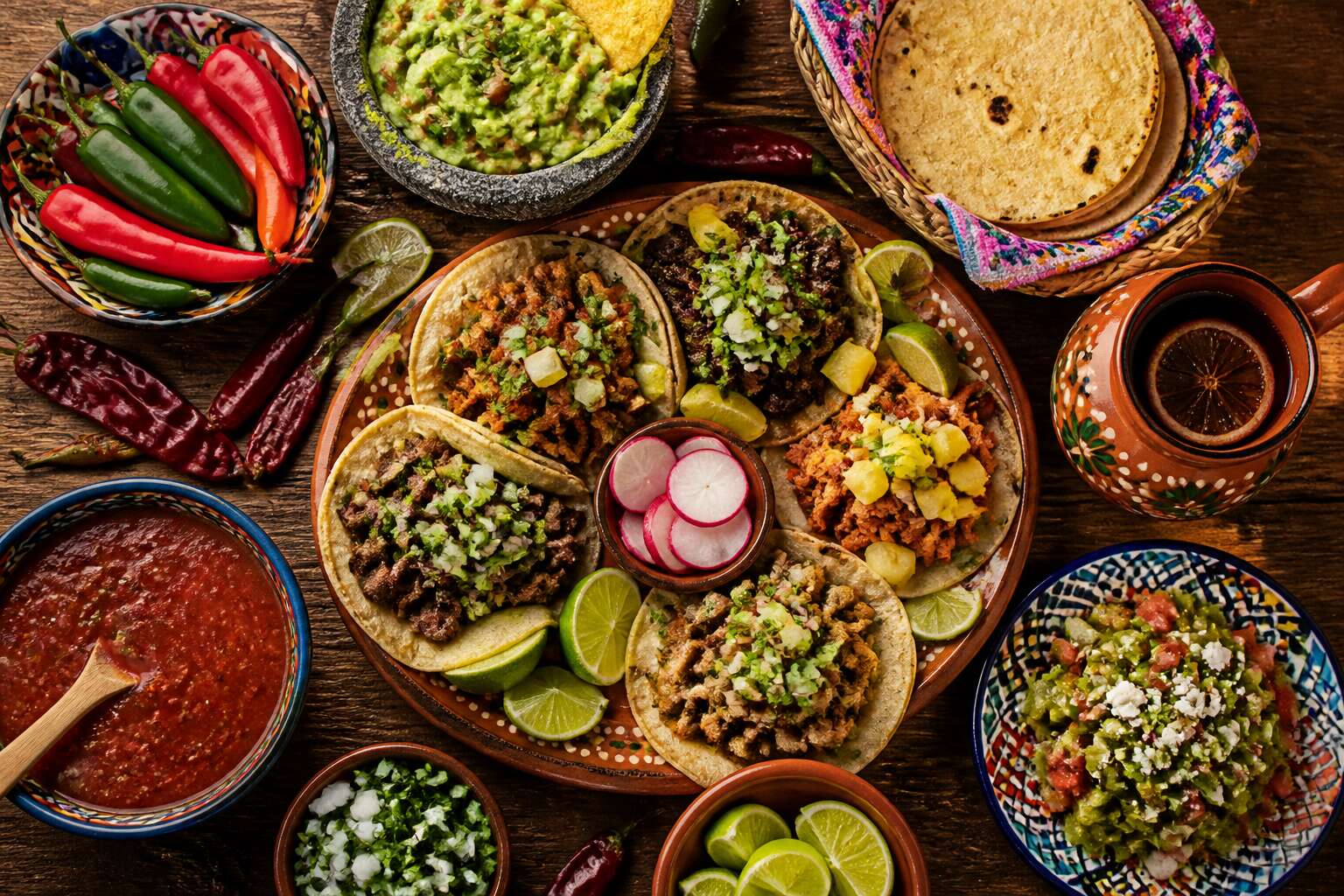
Observe the queue at any taqueria. Silent, patient, and utterly devoted to al pastor, these customers understand the value of patience. The trompo spins, caramelizing pork with pineapple, while chile and achiote build a savoury base. This dish, adapted from Lebanese shawarma, has become a staple of mexican food or its many regional twists.
- Pork marinated overnight in guajillo and achiote.
- Pineapple slices roasted on top for sweetness.
- Small corn tortillas warmed on the comal.
I have watched first-timers hesitate at the pineapple, then order a second round. The balance defines each bite: smoky heat, tangy fruit, soft masa! People return for consistency, not novelty. Whether you prefer salsa verde or habanero, the experience stays personal. Each stand guards its spice mix, a detail that elevates simple ingredients. That is the appeal.
Mole Poblano
One bite of mole poblano reveals why this sauce has fascinated chefs for centuries. It combines dried chiles, toasted spices, and a hint of chocolate that never dominates. The paste is cooked slowly, stirring constantly to avoid burning. That patience turns simple ingredients into a complex, dark sauce.
For anyone exploring mexican food or its storied traditions, mole poblano is a revelation. Its origins trace to Puebla, where indigenous and Spanish techniques collided. The result is a velvety sauce served over poultry, often with sesame seeds scattered on top.
- Mulato and ancho chiles
- Mexican chocolate
- Ground almonds and plantains
Each family guards its own ratio, so no two moles taste alike. That is the appeal of this dish.
Chiles en Nogada
Chiles en Nogada is the culinary prank of Puebla. It looks like a dessert, and I have watched guests mistake it for one. A creamy white sauce covers a stuffed pepper, and pomegranate seeds dot the surface. Then you cut in, and the roasted poblano releases enough heat to clear your sinuses. The filling, minced meat and dried fruits with nuts, pushes sweetness first, then savoury, then chile heat.
The colour breakdown is deliberate:
- Poblano for green
- Walnut sauce for white
- Pomegranate seeds for red
Those are the colours of the Mexican flag, arranged on a plate. For South Africans who have encountered mexican food or only through a franchise, Chiles en Nogada is a revelation. It is traditionally eaten around Independence Day in September, but nothing stops you from making it on a random Tuesday!
Tamales
Tamales predate the Aztec Empire, with recipes surviving centuries. For South Africans who have met mexican food or only through fast-food chains, tamales are a revelation. A soft, steamed pocket of corn dough, wrapped in a husk, holding a savoury surprise inside.
The process is patient. You soak husks, spread masa, add filling, fold carefully, then steam until tender. It’s labour worth repeating.
- Pork in red chile sauce
- Chicken with verde sauce
- Sweet versions with pineapple or strawberry
Each region alters the filling, but the core remains: masa, steam, patience. For authentic mexican food or, tamales offer a texture and flavor anomaly. They are celebratory backyard meals, breakfast companions with atole, scaling from holiday gatherings to casual Sundays.
Pozole
For South Africans who know mexican food or only from fast-food menus, pozole comes as a revelation. This soup of hominy sits on a broth given depth by dried chiles and garlic. Pork is standard; chicken and seafood appear provincially. It simmer for hours, and that patience defines the dish.
Serving pozole requires ceremony. The soup arrives plain, accompanied by a plate of cabbage, radish, avocado, lime, oregano. Each diner assembles their own bowl, balancing citrus with chile. This is food for gatherings. It appears at New Year and birthdays, shared across tables.
Three versions dominate:
- Rojo, with guajillo and ancho chiles, carries an earthy heat.
- Verde, sharpened by tomatillo and herbs, turns tangy.
- Blanco, clean and subtle, relies fully on the hominy.
For South Africans, pozole is the slower heart of mexican food or, a bowl that demands patience and builds community.
Regional Cuisines of Mexico
Oaxacan Cuisine
Oaxaca is a region of indigenous culinary traditions, distinct from central Mexico’s familiar dishes. While many travellers seek common mexican food or mainstream staples, Oaxacans prize their own pantry: bitter chocolate, dried shrimp, and the smoky pasilla oaxaqueña. I find the regional pride remarkable.
- Tlayudas, crisp tortillas with bean paste and quesillo
- Chapulines, toasted grasshoppers with lime
- Tejate, a maize and cacao drink
These ingredients relate to Oaxaca’s microclimates, from the Sierra’s pine forests to the Isthmus’s coastal lagoons. The cuisine favors depth over direct heat. Coast and mountain versions of similar dishes diverge sharply, so a single recipe rarely defines the state.
Yucatan Peninsula
If you believe you know mexican food or the usual suspects, the Yucatan Peninsula will politely mug you at the border. This is Mayan country, where achiote paste stains everything a defiant brick red,and the habanero salsa sits on every table like a small, unblinking warning. Cochinita pibil, pork slow-steamed in banana leaves with sour orange, is the main event, but the real thrill comes from the unapologetic tang of recado negro. Regional staples rarely travel north, so you won’t find them in your local taqueria. Papadzules, soft tortillas drowned in pumpkin seed sauce, and panuchos, fried tortillas stuffed with black beans, demand a local hand. Even the lime soup, sopa de lima, breaks every rule you learned about Mexican broths. Let the Yucatan correct your assumptions, one fiery bite at a time.
Baja California
Baja California’s cuisine runs on a different current. The Pacific and the Sea of Cortez deliver a daily harvest that dictates menus, from street carts to fine dining. This mexican food is not about ancient formulas; it is about immediacy. Signature dishes demand attention:
- Tacos gobernador, stuffed with sauteed shrimp and melting cheese
- Tostadas de ceviche de scallop, tossed in blood orange and chiles
- Marlin tacos, cured in smoky, salt, and pepper
Interior valleys contribute olives, citrus, and dates, producing a pantry that surprises visitors used to inland mexican food. The Mediterranean-like climate explains why Baja’s sauces taste brighter, leaning on garlic, butter, and Thai chiles. The ocean’s daily catch drives this cuisine.
Central Mexico
Central Mexico shapes mexican food or the country’s cooking identity. The highlands deliver a daily routine of masa, beans, and chiles, but the region’s character comes from its markets and street stalls. Nopales, huitlacoche, and epazote appear constantly, often on the same plate.
I have watched barbacoa pits opened in Hidalgo, the meat steaming over agave leaves. Carnitas from Querétaro arrive in copper pots, ready to be piled into warm tortillas. This food is direct, built on local trade and quick hands.
Common ingredients you will see:
- Nopales, the cactus pads
- Huitlacoche, the corn fungus
- Epazote, a strong herb for beans
The central highlands also produce pulque, a fermented agave sap, and a chocolate tradition that favors savory dishes. Daily masa grinding and constant comal turnover matter more than any single recipe.
Northern Mexico
Northern Mexico answers hunger with fire and guts. The desert teaches restraint. A cow becomes machaca jerky, and a whole kid earns its place over open coals. Cabrito anchors Coahuila gatherings; Sonora hands pat flour tortillas for thick grilled steaks.
In this region, mexican food or cooking turns toward the grill. Carne asada is not a meal; it’s a ritual for the whole town. Mesquite smoke hangs over queso chihuahua and serrano chiles. You eat, you argue about the fire, then you pull off another piece.
- Flour tortillas, fresh and oversized
- Queso fundido, molten Chihuahua cheese for sopping
- Pico de gallo, sharp with onion, tomato,and cilantro
This is mexican food or at its most direct. No ceremony. Good meat, hot tortillas,and patience for coals.
Mexican Food in the Modern World
Mexican Food Beyond Borders
Mexican food has crossed every border on the planet, and it’s not coming back. From food trucks in Cape Town to tasting menus in Paris, the world has developed a serious craving for tortillas, chiles, and slow-cooked meats. This isn’t a trend. It’s a permanent shift in how we eat.
The genius of this cuisine lies in its adaptability. It absorbs local produce and techniques without losing its character. In South Africa, chefs are swapping traditional fillings for biltong or peri-peri chicken, creating hybrids that honour both cultures.
Consider what travels well.
- Salsas that brighten any protein, from braai to breakfast eggs
- Corn tortillas, now made fresh in bakeries across continents
- The smoky depth of chipotle, a shortcut to instant flavour
Whether you crave authentic mexican food or a contemporary reimagining, the essential spirit remains bold, direct, and honest.
Fusion and Contemporary Trends
The midnight kitchen has become a laboratory for mexican food or its spectral echoes. In Johannesburg, a chef folds morogo into masa, letting a wild green haunt the tortilla like an old memory. We are seeing fermentation, not as gimmick, but as ritual. Nixtamal, that ancient alkali ghost, now meets rooibos tea and sorghum miso.
- Cricket flour quesadillas
- Biltong-stuffed chiles rellenos
- Marula-infused mole
These fusions do not dilute. They summon new spirits from old bones. The contemporary palate craves smoke, acid, and heat, and our local fire cooks answer. I have tasted a braai-smoked salsa that made me weep for both countries. That is the modern borderless meal: honest, restless, and alive.
Street Food Culture
In Mexico City, street vendors serve millions of tacos daily. In Johannesburg, our markets have caught that energy, trading boerewors rolls for al pastor that sizzles over open coals. Street food culture now spans continents.
You can find mexican food or a Cape Malay curry side by side, each vendor learning from the other. The magic lies in restraint: a simple tortilla, a sharp salsa, a sprinkle of coriander.
- Masa pressed while you wait
- Salsas ground in a molcajete
- Elote slathered with lime and chile
This is not imitation. It is adaptation.

0 Comments