The Classic Tamale: A Deep Dive
What Are Tamales?
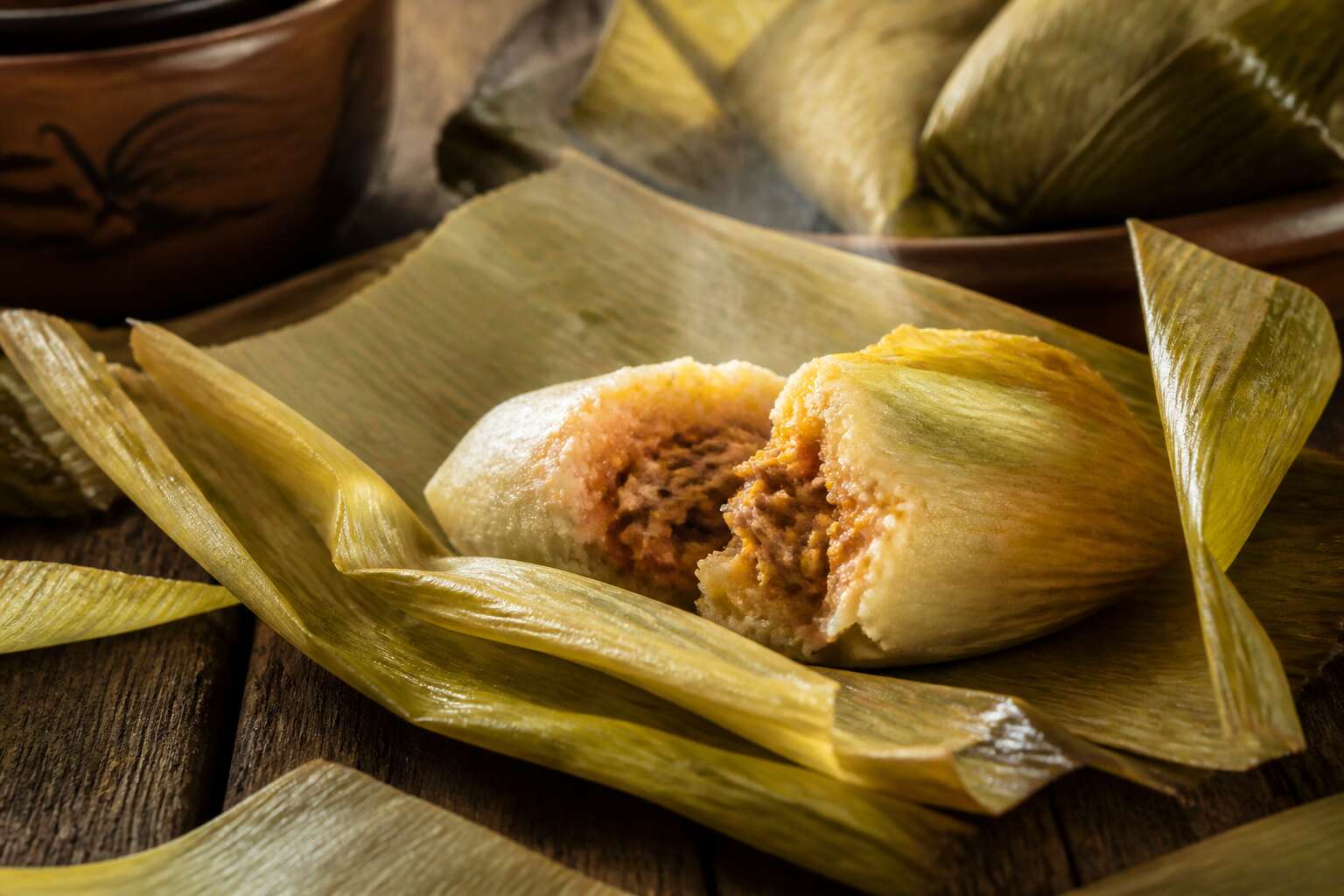
The classic answer to what mexican food is wrapped in corn husk is the tamale. This dish steams a soft corn dough called masa along with a savoury filling inside a dried husk, soaked beforehand to become pliable.
The husk gives the tamale its shape and a faint sweetness. It steams the masa gently, turning raw dough into something soft and satisfying. I find tamales fascinating because they hide their interiors. You cannot know the filling until you unwrap the parcel. That uncertainty makes each tamale a small act of trust.
A basic tamale includes:
- Masa harina mixed with broth or lard
- A filling of slow cooked pork, chicken, or beans
- A corn husk, softened by soaking
The assembly demands care. Spread the masa thin, place the filling, fold, tie, and steam. There is a ritual in that repetition, one worth respecting.
The Anatomy of a Corn Husk Wrapper
Corn husks carry the entire tamale. A single dried husk measures roughly 15 centimetres long, yet it bears a full meal. The wrapper regulates moisture during steaming, releasing water gradually so the masa sets without turning soggy. Field corn, not the sweet corn from your braai, supplies these tough, thick leaves. I respect that strength.
Soaking transforms the husk from brittle to bendable. Thirty minutes in warm water works! Over-soaking leaves it too soft to hold a fold; under-soaking causes cracks. Experienced cooks test each husk by flexing it between fingers.
- Outer husks: coarse and fibrous, ideal for large tamales
- Inner husks: thin and pliable, suited to delicate parcels
That faint corn aroma when you unwrap? That is the husk’s doing. When you ask what mexican food is wrapped in corn husk, the answer is a parcel where the wrapper cooks alongside its contents. The husk is a cooking vessel, not mere packaging.
Fillings From Mild to Spicy
For many South Africans, the first question is always what mexican food is wrapped in corn husk, but the answer goes beyond the wrapper. The classic tamale offers a spectrum of fillings that range from gentle to fiery.
Mild versions often feature shredded chicken in a tomatillo salsa, or a simple blend of queso fresco and roasted poblano peppers. These parcels keep the corn flavor dominant.
Spicy tamales lean into dried chiles. Guajillo and ancho provide warmth, while habanero adds a sharp kick. The filling choices include:
- Pork in red chile sauce
- Beef with salsa verde
- Cheese with jalapeño strips
Each filling steams inside the husk, merging with the masa. I find that the best tamales balance the heat with the sweet corn of the masa. The wrapper holds everything together, and the heat transforms simple ingredients into a meal with depth.
Regional Variations Across Mexico
Northern Mexico: The Beef-Filled Tamales
Northern Mexico serves the tamale in its most austere form. The corn husk wrapper, sturdy and pale, holds a beef filling that has simmered for hours with dried chilies. This region abandons sweetness for a darker, saltier profile. The masa is thicker, the lard more present, and the smoke from the chilies leaves a lasting sting.
Understanding what mexican food is wrapped in corn husk begins here, with these beef-filled parcels. They exist for practical reasons, to nourish ranchers through long days of hard labor.
A typical northern kitchen might prepare several permutations:
- Beef cheek with ancho chili and a hint of blackberry.
- Shredded chuck with epazote and roasted tomatoes.
- Braised short ribs with cinnamon and garlic.
Each version follows the same quiet ritual. The husk steams, the meat softens, and the meal carries a particular weight of the desert.
Oaxaca: The Banana Leaf Alternative
In Oaxaca, the corn husk yields to a broad banana leaf, which imparts a different memory. What mexican food is wrapped in corn husk loses its universal answer here, because the wrapper transforms the entire experience. The banana leaf softens the masa with a verdant, floral steam, creating a moister, more delicate tamale.
Oaxacan cooks choose this leaf for its size and its penetrating flavor. Common fillings include:
– Mole negro, dark and earthy, with chocolate and burnt chilies.
– Black beans and cheese, relying on the leaf for aroma.
– Shredded chicken with yellow mole, bright and subtly sweet.
The leaf reinterprets rather than replaces. Where corn husk holds firm and neutral, banana leaf yields and perfumes. This regional variation forces a reexamination of what mexican food is wrapped in corn husk, showing that the wrapper matters as much as the filling.
Yucatán: Vapor-Steamed Delicacies
In Yucatán, what mexican food is wrapped in corn husk turns toward vapor and smoke. Cooks toast the husk briefly before filling, then arrange the tamales upright in a steam pot. That charred aroma seeps into the masa, which stays moist and surprisingly fluffy.
Fillings lean earthy and tangy. Pork in achiote, turkey simmered in escabeche, or beans with chaya leaves are common. A typical vendor tray might offer:
- Recado rojo pork with pickled onions
- Turkey in a sour orange sauce
- Chaya and black bean tamales
The husk here performs a dual role, wicking excess moisture and binding the tamale into a tidy parcel. Every bite carries a faint grill note. So the Yucatán version answers with steam and fire!
Central Mexico: Sweet Tamales for Dessert
In Central Mexico, the question of what mexican food is wrapped in corn husk takes a saccharine turn. Sweet tamales appear after the main meal, often with hot chocolate or coffee. These are not savory parcels; they are delicate, cake-like treats.
- Strawberry and cream
- Pineapple with cinnamon
- Chocolate with a hint of chili
The masa is whipped with butter or lard until airy, then steamed in the husk until pillowy. Many families reserve these for celebrations or Sunday breakfasts. The husk imparts a subtle herbal note that balances the sugar. So what mexican food is wrapped in corn husk? In Central Mexico, the answer is delightfully sweet.
Coastal Styles: Seafood and Fresh Herbs
On the Pacific and Gulf coasts, the answer to what mexican food is wrapped in corn husk becomes a maritime affair. The masa takes on a green tint from blended herbs, and the fillings lean toward shrimp simmered in tomato and chipotle broth, or flaked white fish brightened with lime and coriander.
The husk performs a specific task here. It traps steam so the seafood never dries out, while a faint smokiness from the dried wrapper works its way into the flesh. Some coastal varieties I have sampled include:
- Snapper with epazote and green olives
- Crab meat with roasted poblano strips
- Pacific shrimp with achiote and pickled onion
I find it remarkable how well the husk preserves the delicate texture of shellfish. These coastal parcels show what mexican food is wrapped in corn husk can become when the sea is the provider!
Corn Husks in Cooking: Beyond Tamales
Corn Husk Wraps for Meats and Fish
Over 90% of corn husk cooking in Mexican kitchens stays within the tamale tradition, but the dried wrapper has a second life. Outside the steamer, husks become a versatile grilling tool for fish and meats. A soaked husk acts as a natural barrier. It locks in moisture and adds a faint, sweet smokiness to the food. This method is common in coastal regions where fresh catch is plentiful. The technique is simple: wrap the protein, tie it with a strip of husk, and place it over hot coals.
– Fish fillets with lime and chile powder.
– Chicken thighs with tomatillo salsa.
– Pork shoulder with achiote paste.
The husk protects the flesh from direct flame, cooking it gently through steam. It also makes the meal portable, perfect for a casual gathering. When you ask what mexican food is wrapped in corn husk, the answer goes beyond the classic tamal. This cooking style brings a subtle earthy layer to the dish that foil or parchment simply cannot replicate.
Corn Husk Tea and Other Infusions
Corn husks step beyond their role as a vessel. After the tamales are gone, the dried leaves can be toasted and steeped into a fragrant tea. I first encountered this practice in a small Veracruz kitchen, where the cook saved every scrap. The resulting drink tasted like warm maize and vanilla, with no added sugar.
- Cinnamon sticks
- Star anise
- Orange peel
Some families add these to the pot, letting the flavors mingle over low heat. Corn husk tea is a quiet ritual, a way to honor the ingredient. When someone asks what mexican food is wrapped in corn husk, the answer is usually tamales. But the same husk that holds dinner can also brew a soothing cup. This thrifty tradition deserves a place in your kitchen.
Grilling and Smoking with Corn Husks
Fire and husk make a fine marriage. When you soak dried corn husks and lay them over hot coals, they release a sweet, grassy smoke that clings to whatever you grill. I use them like a natural blanket for delicate fillets, such as trout or snapper. The husk locks in moisture and imparts a mellow aroma. No oil needed. Simply wrap the fish with a few strips, tie with kitchen twine, and place on the grate.
As for that common query, what mexican food is wrapped in corn husk, tamales claim the answer. But the grilling tradition deserves equal respect. For a deeper smoke, toss a torn husk directly onto the embers. It curls and blackens, sending up a wispy perfume. This method works for chicken thighs or even thick slices of pumpkin. Experiment with citrus zest inside the wrap, or a smear of smoky salsa. The husk does the rest.
How to Work With Corn Husks: A Culinary Guide
Soaking and Preparing Husks
The answer to what mexican food is wrapped in corn husk often lies in preparation. A dry husk snaps. Warm water changes its character completely. Submerge the husks for roughly thirty minutes, and they turn into pliable leaves.
After soaking, drain them and pat dry. Examine each one for stray silk or stubborn dirt. Trim the tough, tapered ends with scissors so they fold without resistance.
- Choose wide, unblemished leaves for folding.
- Stack soaked husks under a damp cloth to preserve moisture.
When you ask what mexican food is wrapped in corn husk, the answer points to a rustic craft. The magic lives in this step. Properly soaked husks hold their shape without tearing, yielding a moist, aromatic result that defines the finished parcel.
Folding Techniques for Perfect Tamales
The fold determines the final character more than any filling. A loose wrap leaks liquid and steams unevenly. Ask what Mexican food is wrapped in corn husk, and the answer arrives in folds. Take a pliable leaf and lay it flat. Spread a circle of masa across the wide end, leaving the tapered tip bare. Spoon the filling across the centre line.
Fold the right side over the masa, then the left. Tuck the tapered tip underneath to lock the package. Many cooks pinch the open top and fold it down, creating the classic tamale parcel. The husk must hold the masa loosely enough to swell during steaming, but firmly enough to keep its shape.
Tamales arrive in shapes tied to regions. Each approach answers what Mexican food is wrapped in corn husk with a different geometry:
– The classic roll pinches both ends under.
– The pyramid stands upright in the steamer.
– The flat packet opens easily at the table.
The parcel is not a mere covering. It distributes heat and condenses steam, turning the contents tender. A secure fold transforms soaked leaves into a meal with structure and ceremony.
Cooking Methods: Steaming vs. Baking
The steam that rises from a tamalera is a transformative force, one that swells the masa into a soft, yielding pillow. Steaming, rather than baking, is the traditional path because the moist heat within the pot acts directly on the dried husk, softening it further and allowing it to impart a subtle, grassy sweetness to the dough. Baking, by contrast, introduces a dry heat that crisps the outer layer of the husk and can render the edges of the masa tough. This method is not without merit; a baked tamale develops a firmer, more defined structure, and the exposed surfaces gain a pleasant, toasted nuance that steaming cannot achieve. When considering what mexican food is wrapped in corn husk, the cooking method becomes a decisive factor in the final mouthfeel.
A proper steam requires careful management of water levels. You want a vigorous, rolling boil, but the liquid must never touch the base of the tamales, or they will become sodden. The environment inside the pot should be one of constant, gentle circulation.
– Use a tight-fitting lid to trap the vapor.
– Keep the water at a low, consistent boil to avoid shocking the husks.
– Allow for at least 90 minutes of cooking time for a standard batch.
For those who prefer the oven, a covered dish with a shallow layer of water is essential to create a semblance of the steaming environment. The result is a product with a slightly drier exterior and a more concentrated corn flavour, a variation that many South African cooks find appealing when adapting the dish to local ingredients. The choice ultimately rests on the texture you wish to present, and the answer to what mexican food is wrapped in corn husk is shaped by this culinary decision.
Storing and Reusing Husks
Dried husks are patient relics. Once the tamales have been devoured, the remaining wrappers need not meet the bin. Rinse them of clinging masa, spread them on a cloth, and let them rest until they rattle like old paper. Store them in a sealed jar, away from light and damp, and they will wait months for another purpose. Rehydration returns their pliancy, and so the cycle continues.
A second use carries a quieter flavour, less green, more like memory. Many cooks reserve their most weathered husks for infusions or for lining the steamer, where the heat coaxes out the last suggestion of corn. This is the quiet afterlife of what mexican food is wrapped in corn husk, a tradition of thrift that darkens the kitchen with ritual. Each fold repeats a history older than the pot that holds it.
Troubleshooting Common Issues
Dry husks are brittle, wet ones are slippery. Most failures happen between those two states. A tear along the spine means the husk was not soaked long enough, so returning it to warm water for another minute helps. Masa that refuses to stick usually signals a patch of moisture left on the surface, so wiping the husk with a dry cloth before spreading corrects the problem. Loose folds cause steam to escape, leaving a tamal pale on one side and dense on the other. Pressing the seam flat until the wrapper holds firms the bundle.
Common issues fit a pattern:
- Ragged edges respond to trimming before soaking.
- Gummy texture fades when the batter loses water.
- Burst seams require a more generous overlap.
What mexican food is wrapped in corn husk is never immune to these faults. Learn how the husk bends, how the masa holds, and the repair becomes routine.
Cultural Significance and Traditions
Tamales in Celebrations and Festivals
Tamales define Mexican fiestas. Ask any household what mexican food is wrapped in corn husk, and the answer lands fast: tamales. These parcels carry centuries of ritual.
Christmas and Día de la Candelaria bring families into tamaladas, where sticky masa and seasoned fillings pass hand to hand. The husk binds more than ingredients; it binds generations.
- Las Posadas processions
- Wedding feasts
- Ancestor offerings on Día de los Muertos
Each occasion shapes the filling, yet the corn husk stays constant. My grandmother never measured a thing. She knew by touch. That wisdom continues!
The Symbolism of the Corn Husk
Corn husks carry meaning older than the tamales they wrap. In Mesoamerican belief, maize gave birth to humanity. The husk, often thrown away, holds the most sacred food inside. That inversion matters. The plain outer leaf protects what nourishes.
When someone asks what mexican food is wrapped in corn husk, the answer is tamales. But I find the husk itself the more interesting subject. It teaches patience. A dried husk must soak, soften, and yield before it can serve.
- It shields without imposing flavour
- It lets steam pass while holding shape
- It leaves its pattern on the masa
Those ridges on a cooked tamale are the husk’s signature. In South African kitchens, the same logic applies with maize leaves. The wrapper is not a container. It is a participant.
Regional Legends and Folklore
In Oaxaca, elders whisper that the first tamale came from a goddess who tore strips of her own skin to wrap the maize. The husk remembers that sacrifice! Every December, families fold these parcels, and the kitchen becomes a place where the living and the dead share the same steam.
- The husk is never wasted, it is returned to the earth
- Each region folds its tamales differently, a silent dialect
- Small tamales are left on altars for restless spirits
To ask what mexican food is wrapped in corn husk is to ask about memory. The answer is tamales, but the husk holds more than food. It holds the names of women who rose before dawn and the belief that a soul can be fed through maize. I once watched a grandmother in Mexico City sell tamales from a basket that had travelled further than I had! In South African shops, the same question surfaces, and the answer remains a small, steaming miracle.
Passing Down Family Recipes
In a small row house in Johannesburg, my neighbour’s mother answers the question of what mexican food is wrapped in corn husk with her hands. She learned the recipe from her abuela, a method that never relied on written steps but on the sound of masa slapping the bowl and the sight of the husk splitting after steam!
Passing down a family recipe for tamales is an oral history. Each woman adds a pinch of salt, a quieter hand with the chilli, and the memory of a missed holiday. The tradition survives because the next generation watches, not reads. They acquire the exact pressure for the fold and the patience for the long simmer.
What mexican food is wrapped in corn husk becomes a lesson in continuity. The recipe shifts with each generation, yet the core remains. That is the inheritance: hands that know what the corn requires.




0 Comments